



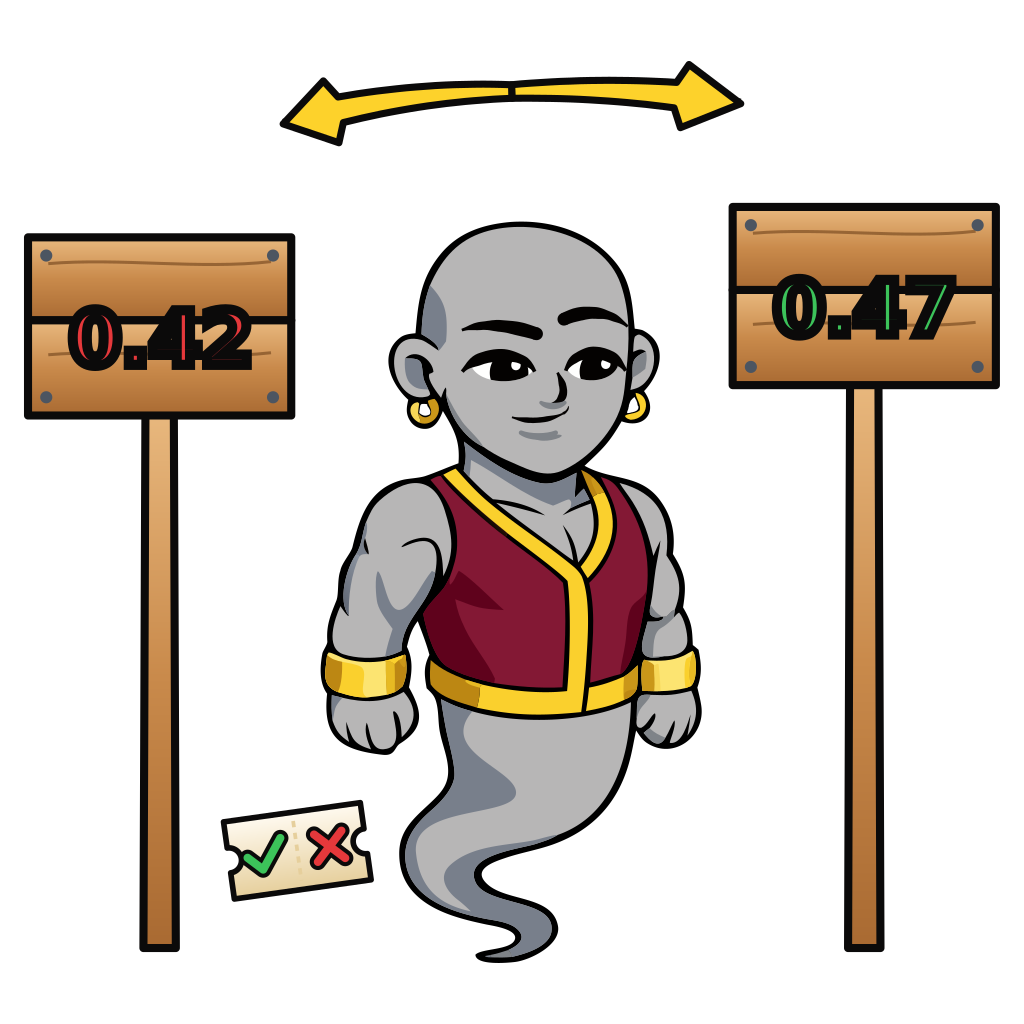
The same question can trade at 0.40 on Kalshi and 0.47 on Polymarket. Cross-Provider Gap buys on Kalshi when its best ask sits at least 5 cents below the Polymarket best bid, and sells once the Kalshi bid has caught up to within 1 cent. If the gap never closes, it holds the shares to the result.
What it costs
This strategy is open on every plan. What it trades is fixed by its design, so every plan runs the same scope; Standard is free.
Recommended minimum vault: Elite · See all store pricing →
How it works
The strategy compares one outcome of an event on Kalshi with the same outcome on Polymarket. When the Kalshi best ask is at least your minimum gap below the Polymarket best bid, it places one bid at the top of the Kalshi book, up to your budget per trade. It sells on Kalshi once the Kalshi best bid is back within your closing gap of the Polymarket best bid, and otherwise holds to the result, which Kalshi pays out by itself. It needs two vaults: a Kalshi vault it trades on and a Polymarket vault it only reads prices from.
Key Features
Strategy profile
A snapshot of how this strategy behaves and who it suits, not a forecast of returns.
These are our assessments of strategy character, not user-specific performance figures.
A gap between two different questions is not a gap. Providers often word and settle similar events differently, with a different close, a different source or a different rule, and the cheaper side can lose while the other wins. Check that both ask the same question with the same close and the same rules. Kalshi's fee is largest near 0.50, so leave room for it in the gap.
All figures on this page are simulated or historical backtest results, shown for information and education only. They are not real customer results, they do not include your specific fees and slippage, and past performance does not guarantee future returns. Your capital is at risk.
Frequently Asked Questions
Quick glossary
Definitions for the trading terms used on this page.
- Backtest
- A simulation of how a strategy would have performed on historical price data. Past results never guarantee future returns - markets change.
- Slippage
- The difference between the price you expect and the price you actually get when an order fills. Worse on illiquid pairs and during fast markets.
- Spread
- The gap between the best buy price (bid) and the best sell price (ask). Tight spreads = liquid market, wider spreads = more cost per round trip.
- Stop-loss
- An automatic exit order that closes a losing position when price hits a chosen threshold. Caps how much one bad trade can hurt you.
- Take-profit
- An automatic exit order that closes a winning position once price reaches a chosen target. Locks in gains without relying on you to watch the chart.
- Volatility
- How sharply price moves. High volatility = bigger swings in both directions, which means more opportunity but also more drawdown risk.



Spotted the same question at two prices?
Every new Prediction Cross-Provider Gap starts in paper trading: its orders are kept on paper and never fill, and a paper run stops by itself one hour after each start.
Start on Platform